
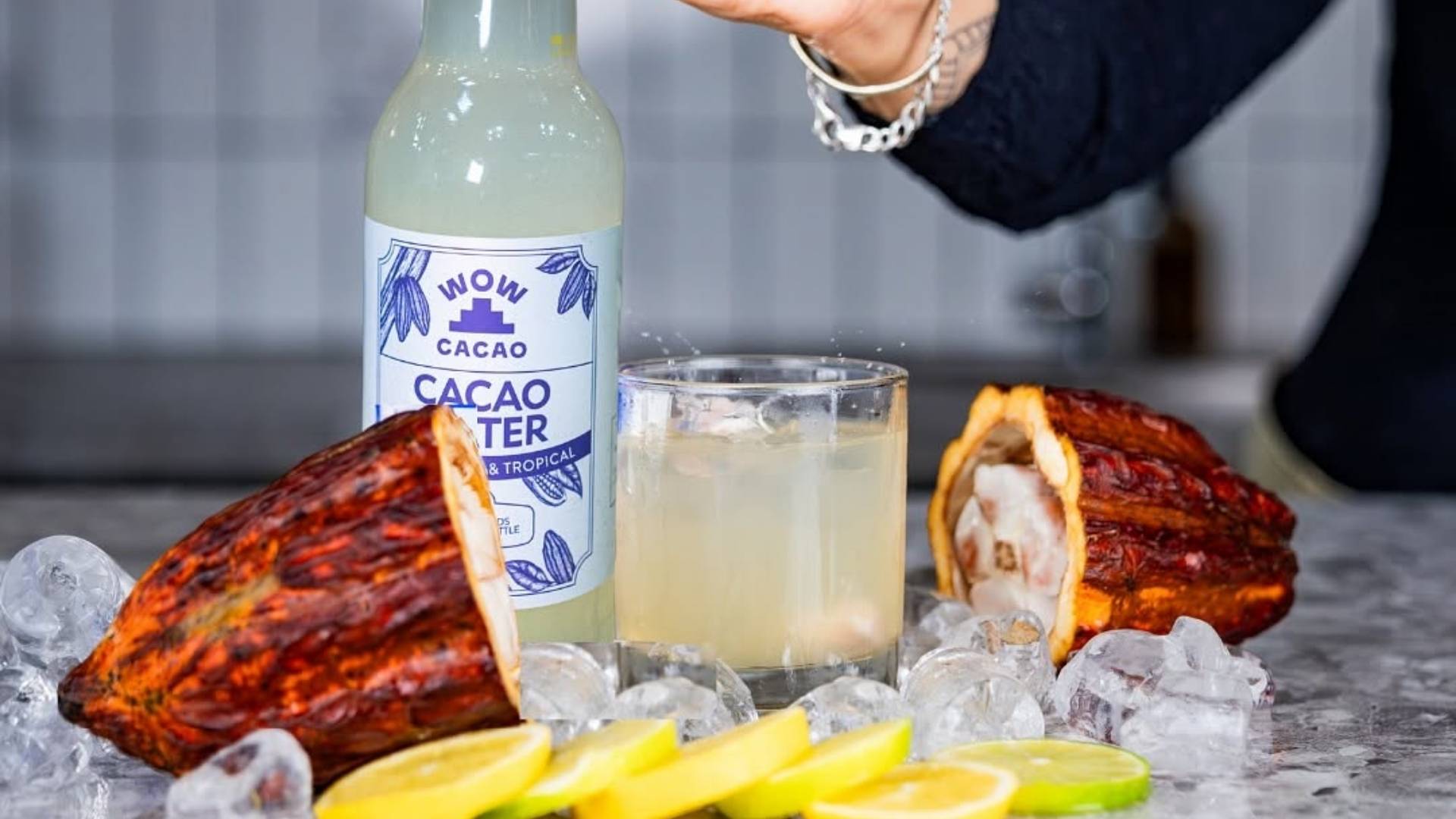
Could Cacao Water Be the Next Coconut Water? Meet the Founder Behind Wow Cacao
What if cacao had a place in the drinks world beyond chocolate? That is the thinking behind Wow Cacao, the brand founded by cocoa industry expert Pam Thornton, who is bringing the naturally sweet juice and pulp of the cacao fruit to consumers in an entirely different way.
Wow Cacao is a UK drinks brand built around the part of the cacao tree that most of us never get to see, the fruit that surrounds the beans long before anything is turned into chocolate, and it arrives at a moment when British drinkers are paying closer attention than ever to what is in the glass and where it comes from.
From refreshing cacao water and sparkling cacao water to 100% cacao juice and cacao pulp for cocktails, smoothies and cooking, the range opens up new ways to experience an ingredient that has traditionally been valued for its beans. With its focus on taste, versatility and the potential of the whole cacao fruit, Wow Cacao sits at an interesting intersection of modern drinking, wellness and food.
It is a bold proposition for a category that has only recently begun appearing on British shelves, but one backed by Pam’s decades of experience in the global cocoa industry. We sat down with her to explore what first drew her to cacao, the thinking behind Wow Cacao, and why she believes we are only beginning to discover what the fruit can offer.
You’ve spent more than 40 years working in the cocoa industry. What was it about cacao that kept you fascinated for so long, and what made you decide it was time to build something of your own?
As a kid I had lived in some fairly remote parts of the world such as Papua New Guinea. My father was a helicopter pilot, normally flying exploration teams looking for minerals or oil. I began my career as a trainee on one of the trading desks at one of the world’s largest commodity merchants (Cargill), initially working on the white sugar desk, largely exporting sugar from the EU, that at the time was one of the world’s largest suppliers. When the opportunity came to switch to cocoa, I was thrilled as it gave me a chance to travel to and work with less developed countries such as Cote d’Ivoire and Cameroon, Indonesia and PNG.
Cocoa is a small global community and most of the major participants know and respect each other despite being competitors.It has been a privilege to work within it. How lucky am I that Ive enjoyed every day of my working life. I finished full-time work supplying the major chocolate industry with their beans a few years ago so now spend my time with various smaller projects of my own. I have a share in a cocoa farm in Brazil and have been selling cocoa juice into the local market for about 10 years. Now that the logistics have improved, the timing seemed appropriate to test the UK market.

Most of us associate cacao with chocolate, yet the fruit itself is surprisingly different. What do you think people would be most surprised to discover about the cacao pod? Anthropologists have found the DNA of the juice in multiple artifacts over 5000 years old so it is clear the indigenous people of the upper Amazon enjoyed it. From the art it is evident that the Mayans believed it had magical powers giving warriors super strength and energy as well as being an aphrodisiac. The Aztecs then embraced the traditions, also using it in festivals and rituals to take to the After-Life. No wonder botanists crowned it Theobroma – “Food of the Gods”. Of course the juice is sweet and, if left to ferment, it would become alcohol 😊 . Gradually the beans themselves became more widely popular, both as bitter drink laced with chilli, but also as a form of currency, indicating just how prized the fruit had become. During the Voyages of Discovery in the 16th century the beans were brought to Europe to be enjoyed as a drink in the royal courts of Spain and Portugal. Cocoa powder and moulded chocolate are features of the last 200 years. Most people expect the juice to be brown and taste like chocolate which of course is not the case. It’s a creamy white juice that is classically tropical in taste-naturally sweet, fruity and reminiscent of pineapple, grapefruit and lychee while also being unique. It is delicious whether drunk straight or diluted; alone or as a mixer. Cacao is a legitimate super-fruit and the pulp and juice contain a wide variety of nutrients, minerals and polyphenols. They don’t need any added sugar or sweetener to make them palatable. |
For someone who has only ever experienced cacao as chocolate, what can they expect from their first taste of cacao water? A delicious and refreshing hydration drink, somewhat in the same family of flavours as coconut water but with a fruitier taste. |
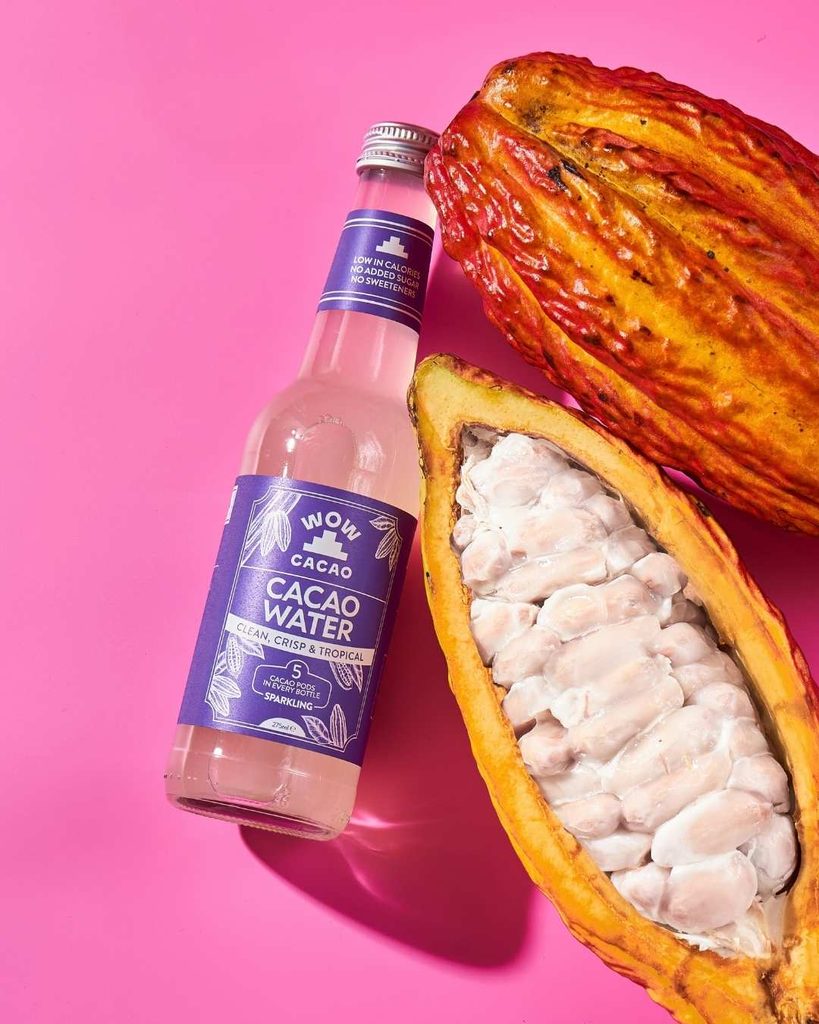
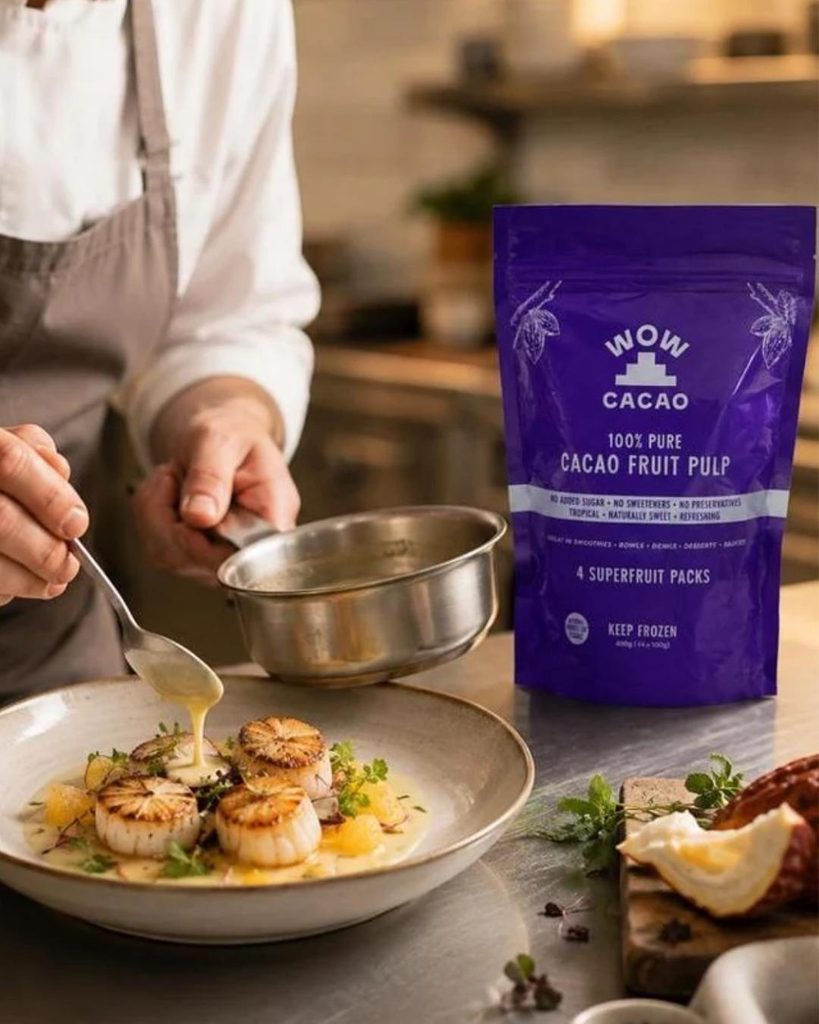
Wow Cacao has grown from its original cacao water into a wider range of products, including still and sparkling options. How would you describe the range, and are there particular occasions or ways you enjoy each one? We started with cacao water as we feel it meets a need – a nutritious and irresistibly refreshing drink in premium glass that can be enjoyed by the whole family in multiple settings and circumstances. The still is perhaps slightly more suitable for drinking pre or post exercise whereas the sparkling shines as a sipping or celebratory drink, a sort of non-alcoholic prosecco. We have introduced 100% juice in a 750 ml pouch to allow home use in drinks, smoothies, lollies and desserts as well as for bartenders to mix it. It’s brilliant in all forms of alcohol and non-alcoholic cocktails. We also have pulp in easy-to-use 100g or 1 kg sachets. This is perfect for preparing bowls or smoothies. Unlike bananas it adds sweetness and texture while not destroying any of the flavonoids present in other fruits such as berries. For hospitality or home chefs, the pulp presents lots of opportunities for creative use in the kitchen – as a chocolate centre, in baking, making ice cream as well as in sauces. |
Sparking Cacao Water
Frozen Cacao Pulp
Sustainability can sometimes become a marketing buzzword. What does responsible sourcing actually mean to you when you are working with cacao? My partner ,Carolin ,and I ,are veterans of a period wherein sustainability has moved from a vague buzz word to a necessary reality. One needs to know where raw materials are grown, who grows them and the conditions under which they are cultivated as well as the situation at any facilities involved in processing the final products. Obviously the main risks at origin include human rights and environmental issues, such as deforestation, whereas here in the UK they would include emissions,safety and hygiene at factory level .We know our supply chain intimately and all farms supplying us are fully documented. We have chosen to source our juice in Ecuador from modern, high-tech cocoa farms rather than West Africa where unfortunately,conditions can still be quite problematic. |
You’ve travelled extensively through cacao-growing regions. Is there a particular place, farm or experience that has stayed with you? I love West Africa -and all the producing countries there-for its wonderful people-friendly and cheerful in the face of often very challenging economic circumstances. A finished product requires control over a clean supply chain and consistent raw material quality. Unfortunately, right now we feel the infrastructure is not sufficiently advanced to source from here although I hope we can get to that point. The farm in Bahia is obviously special because I have a stake in it. |
What do you hope Wow Cacao changes about the way people think about cacao over the next five years? Making people understand that there is more to cacao than chocolate – it’s also the source of a wonderful and unique tropical juice. Given the current global post-harvest conditions, most of this juice is just lost, percolating away into the ground. If we can help generate demand, the logistics will follow. If cacao juice can gain even a fraction of the popularity of coconut water we will have accomplished something meaningful and helped contribute to the economics of a sector that means so much to us both. |
Related Reads: Why Liquid Electrolytes Are Changing the Way We Think About Hydration