Inside Ytri : A New Kind of Remote Luxury Hotel on Norway’s Wildest Edge
“Norway’s most remote island retreat” is quite a claim, but Ytri’s setting makes it easy to understand. The journey begins in Bodø, followed by a ferry or express boat across the Norwegian Sea to the remote Træna archipelago – a cluster of 477 islands. Surrounded by sea, rugged islands and the dramatic Trænstaven mountain, Ytri Island Retreat is a Relais & Châteaux hotel built around remoteness, nature and a deep connection to one of Norway’s most distinctive island communities. For those who would rather skip the regular crossing, Ytri can also arrange a private charter boat or helicopter transfer, with its own helipad making even the most remote arrival surprisingly effortless.
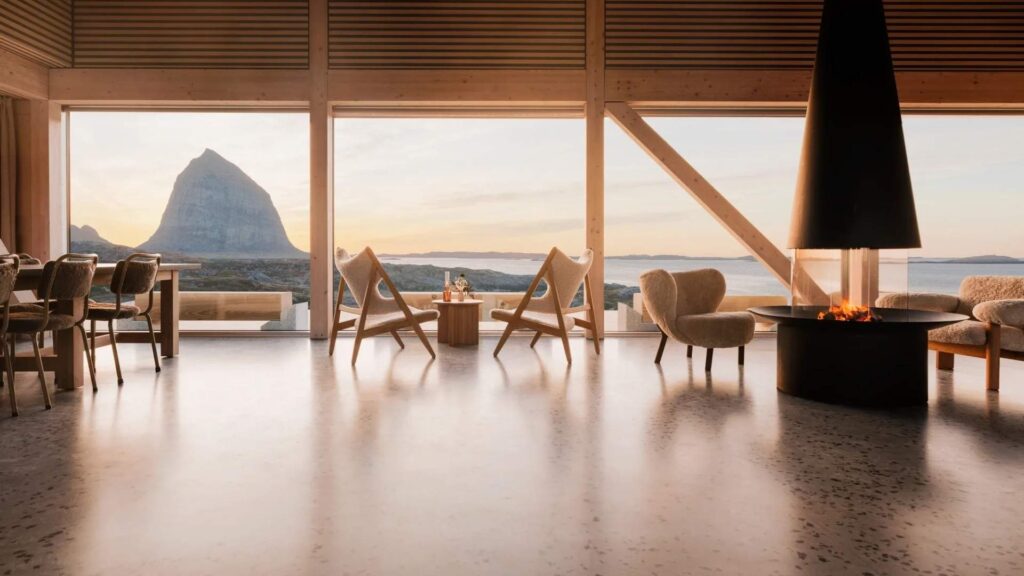
One of Norway’s oldest fishing communities, Træna sits almost directly on the Arctic Circle. It is here, on the small island of Husøya, that Ytri has opened its doors. But Ytri isn’t chasing the “middle of nowhere” cliché for its own sake. This is a hotel with real roots, created by people with a long-standing connection to the islands and shaped by a vision that goes well beyond hospitality. The community’s relationship with the sea and surrounding landscape has shaped life here for generations, and that heritage is woven throughout Ytri, from its architecture and interiors to its food, experiences and connection with local life.
The Story Behind Ytri Island Retreat
The story behind Ytri Island Retreat starts a decade before the first guest ever arrived. Back in 2015, Træna’s municipality faced a hard truth, the fish stocks its 400-odd residents had relied on for generations were shrinking, and with them, the population. Rather than watch the island slowly empty out, the community chose to invest, in a future built around tourism, without losing what made the place worth visiting.
That community-first approach runs through the hotel. Most remote luxury hotels sell escape. Ytri sells belonging. Every part of the operation, from the produce on your plate to the person pouring your coffee, is tied back to Træna and the people who call it home. Architecture firm Vardehaugen led the design, taking cues from the low-slung, weather-hardened fishing houses that line this coast, while Bonaparte Interiør handled the warm, pared-back interiors.
The Rooms: Which Ytri Room Should You Book?
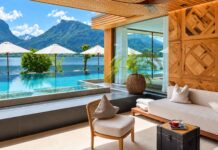
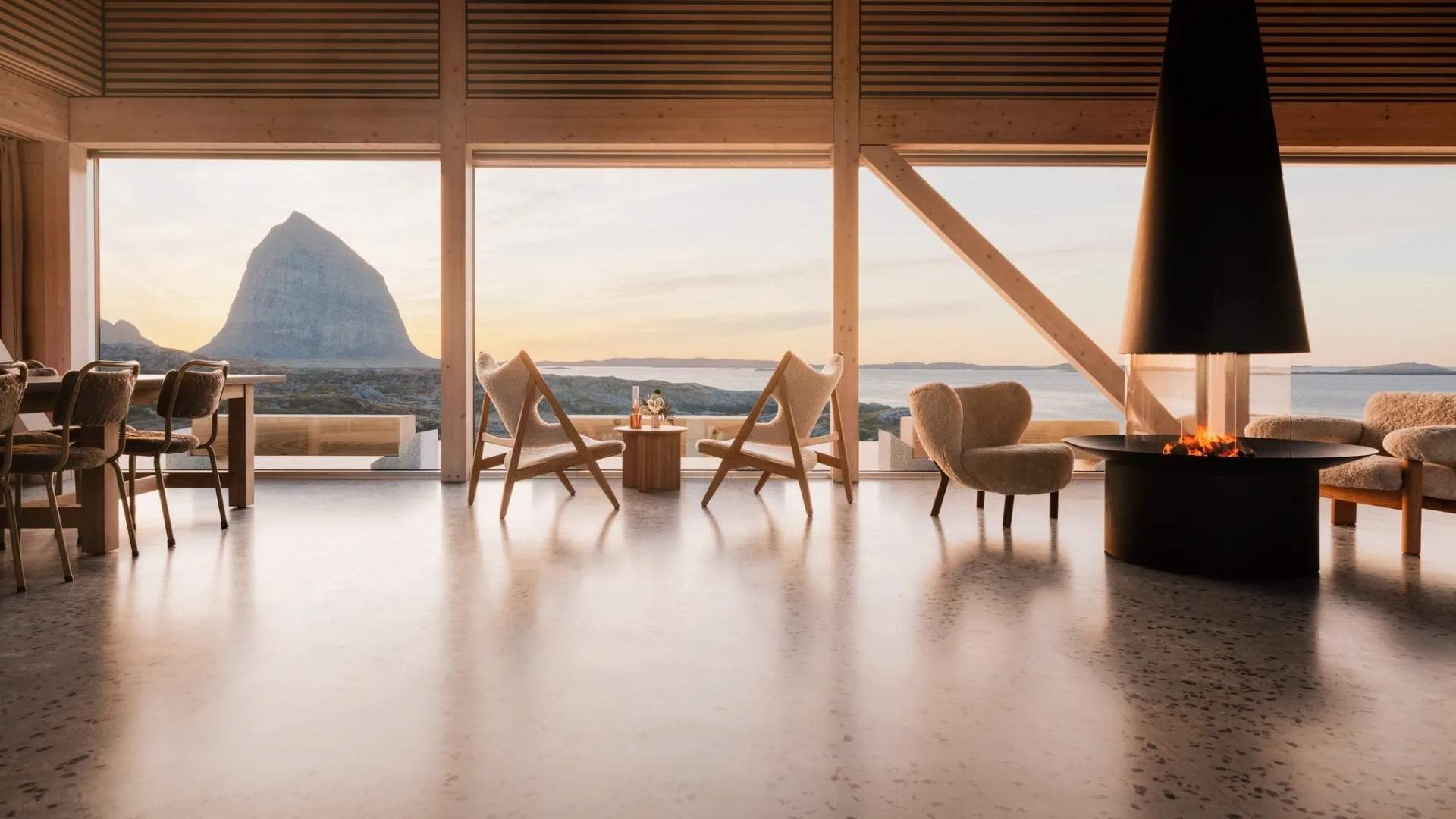
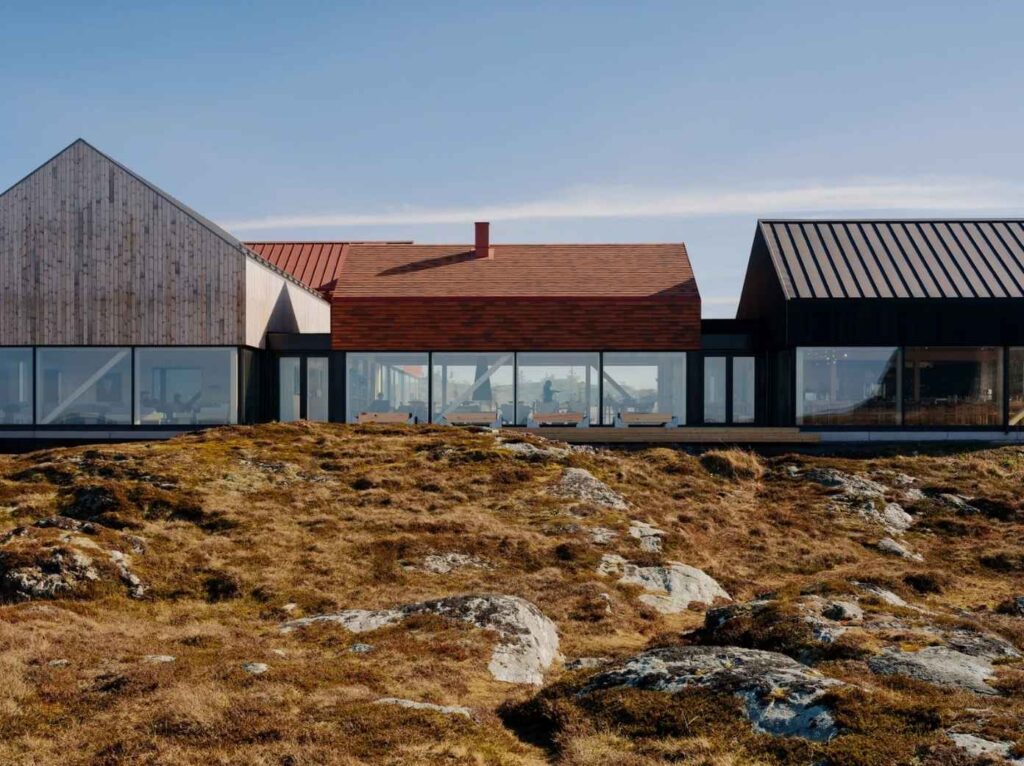
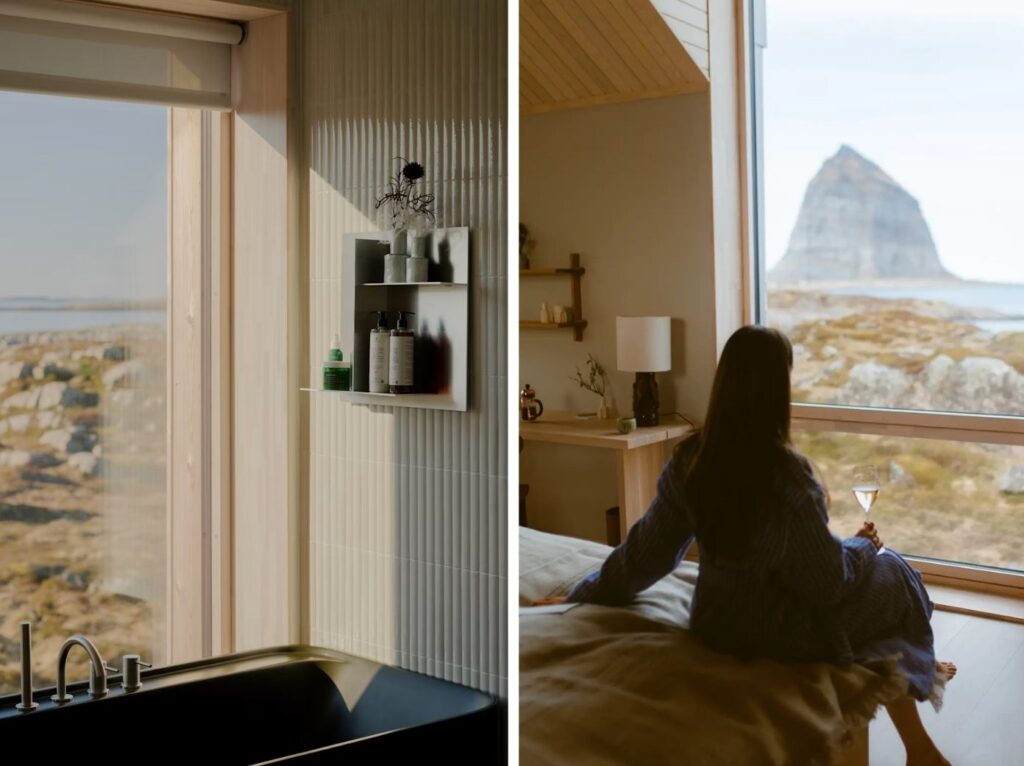
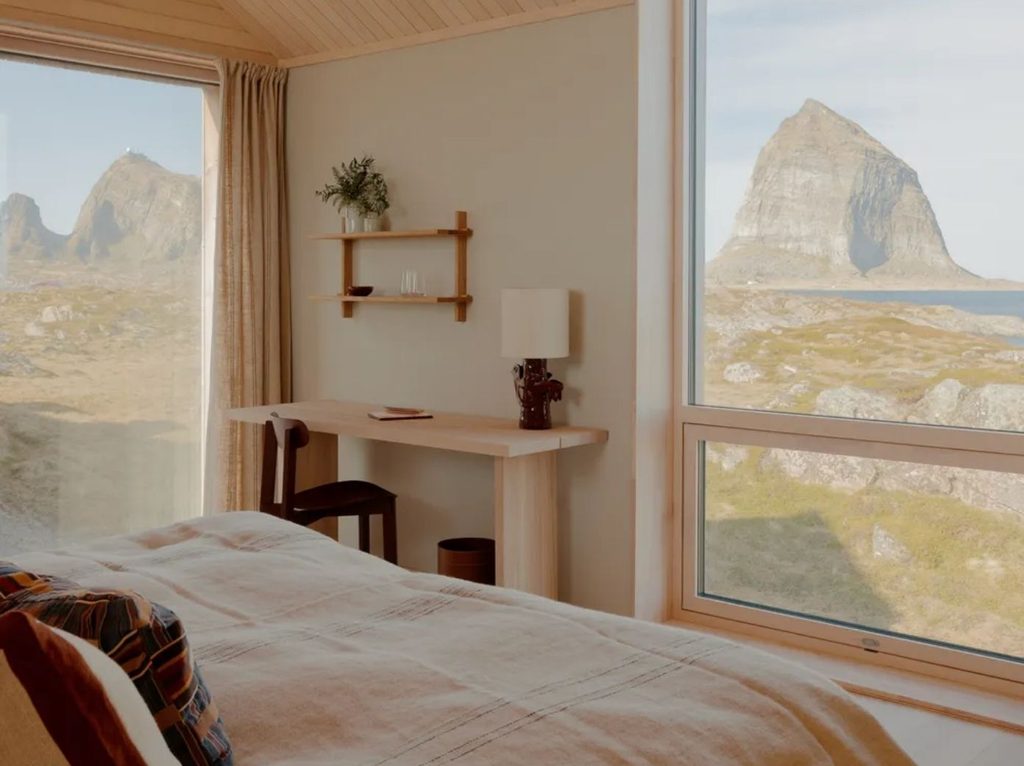
Ytri’s 38 rooms and suites are gathered like a small coastal hamlet, built to withstand the wind and carefully framed to make the most of the views across the sea and towards Trænstaven. Interiors are deliberately calm, with pale woods, natural textures and Norwegian materials keeping the focus on the landscape outside. Floor-to-ceiling windows in every room frame the dramatic, shark-toothed Trænstaven mountain on neighbouring Sanna, while some bathrooms take the view a step further with sculptural bathtubs positioned towards the landscape.
The categories range from comfortable Superior Rooms to spacious Premium Suites, with the main difference being how much space you have to settle in and enjoy the view. The Superior Room makes sense if you plan to spend most of your time exploring the islands, while the Premium Superior is the better choice if natural light and the outlook are particularly important. For a little more space, Deluxe Rooms offer a comfortable middle ground, while the Suites add a separate lounge and bio fireplace, making them especially appealing for a slower stay or a winter escape.
At the top end, Premium Suites have a separate lounge, fireplace and walk-in wardrobe, and are the ones to book for a special occasion or longer stay. For the full Ytri experience, we would recommend a Premium Suite, particularly outside the summer months, when having a beautifully designed space to retreat to after a day outdoors becomes part of the appeal.
Alma: Dinner Shaped By The Sea
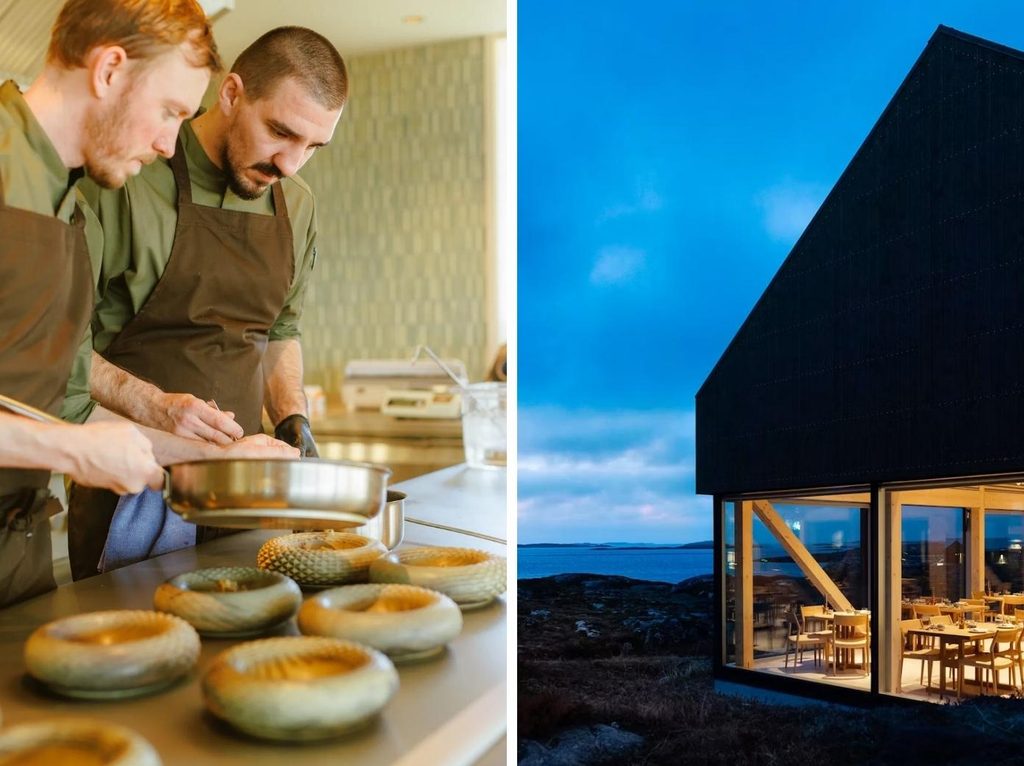
Restaurant Alma is where Ytri’s food philosophy comes into sharpest focus. Each evening, a four-course menu is built entirely around what’s come off the boats that day and vegetables from the hotel’s own greenhouse. From Wednesday to Saturday, the Chef’s Table steps things up further with a twelve-course tasting menu, paired with a thoughtfully chosen wine list or alcohol-free alternatives. Portions are kept deliberately considered, with waste minimised and almost everything made in-house.
Beyond Alma, there’s a relaxed lounge bar serving fish soup, crab, mussels, and open prawn sandwiches alongside cakes from the in-house pastry chef and barista coffee, plus breakfast served at your table each morning and full room service available around the clock.
Related Reads: Inside Kvitnes Gård: The World’s Northernmost Michelin Star Above the Arctic Circle
Activities: Life At The Edge Of The Map
There’s no shortage of ways to fill the days here. Here, you are immersed in the traditions of the Arctic Circle, with experiences that bring you closer to the landscape and the way of life that has shaped these islands for generations. A sauna ritual, catch-and-cook fishing with open-fire cooking on the shore, or a guided hike to Kirkehelleren, one of the region’s most significant archaeological sites, are all on offer.
The Træna Heritage Walk offers a window into one of Norway’s oldest fishing communities, while trips further afield include seaweed harvesting at Kaffekollektivet, a guided walk around neighbouring Selvær Island, Arctic freediving, deep-sea fishing and whale watching. You can even head to the nearby island of Myken for the Myken Whisky Experience. Kayaks, SUP boards, diving and fishing gear, and bicycles are all available to borrow, while the wellness area, with saunas, a cold plunge, hot tub and sea views, is there for the days best spent close to the harbour.
Related Reads: 8 Best Hotels In Norway To See Northern Lights
Best Time To Visit Ytri
For the midnight sun and longest days, visit in summer. The sun stays above the horizon late into the night, giving you long days for hiking, kayaking and boat trips, while Trænafestivalen in July brings music and energy to the islands, culminating in a rave, a nod to the early travellers who once pulled their kayaks ashore here.
For softer light and a quieter atmosphere, choose August or September. The landscape takes on a more atmospheric quality as summer fades and the islands become noticeably calmer.
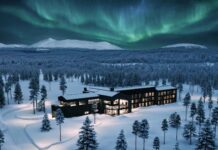
For the possibility of Northern Lights, visit in winter. Darker skies bring the chance of seeing the aurora, while Ytri’s sauna, hot tub, fireplaces and Alma restaurant make the colder months particularly appealing.
For spring landscapes, visit from April. The islands begin to wake from winter, with softer light, emerging vegetation and a quieter feel before the summer season begins.
| Getting to Ytri: The classic route is a flight into Bodø followed by a high-speed boat of around five hours, long enough to feel the distance stack up behind you. For a shorter crossing, fly into Sandnessjøen instead: a fifteen-minute taxi to the quay, then a boat straight to Husøy. For those who’d rather skip the queue altogether, Ytri can arrange a private charter boat or a helicopter transfer, the hotel has its own helipad. |
All listings featured in this article were independently selected. However, when you book something through our links, we may earn an affiliate commission. All the images belong to the respective owners.